

A construction accident lawyer can help injured workers and families understand what to do after a serious job site injury. Many people face medical bills, lost income, and pressure from employers or insurers before they know their rights. This article explains your options, the claims process, and the steps that can protect your case.
Key Takeaways
- A lawyer can identify all available claims.
- Workers’ compensation may not be your only option.
- Fast action helps preserve evidence and witness details.
- Third-party claims can increase total compensation.
- Deadlines can limit or block recovery.
What does a construction accident lawyer actually do?
A construction accident lawyer investigates the injury, identifies liable parties, and pursues compensation beyond basic workers’ compensation when the facts allow. They gather records, preserve evidence, deal with insurers, and help clients avoid mistakes that can weaken a claim.
Construction injury cases often involve more than one company. A general contractor, subcontractor, property owner, equipment maker, or site manager may share responsibility, so legal review helps uncover every possible source of recovery. This is directly relevant to construction accident lawyer.
Your lawyer also builds the paper trail. That includes incident reports, medical records, wage loss proof, photos, OSHA-related documents, and witness statements that support both fault and damages. For anyone researching construction accident lawyer, this point is key.
Why this matters early
Early action can make a major difference. Job sites change fast, damaged equipment gets moved, and witnesses forget details, so a prompt investigation gives your case a stronger foundation. This applies to construction accident lawyer in particular.
The U.S. Bureau of Labor Statistics reported 1,075 fatal work injuries in construction in 2023, more than any other industry sector. Source: bls.gov.
Can you sue after a construction site injury?
Yes, sometimes you can sue after a construction site injury, but it depends on who caused the harm. Workers’ compensation usually limits lawsuits against your employer, yet you may still have a separate claim against a negligent third party. Those looking into construction accident lawyer will find this useful.
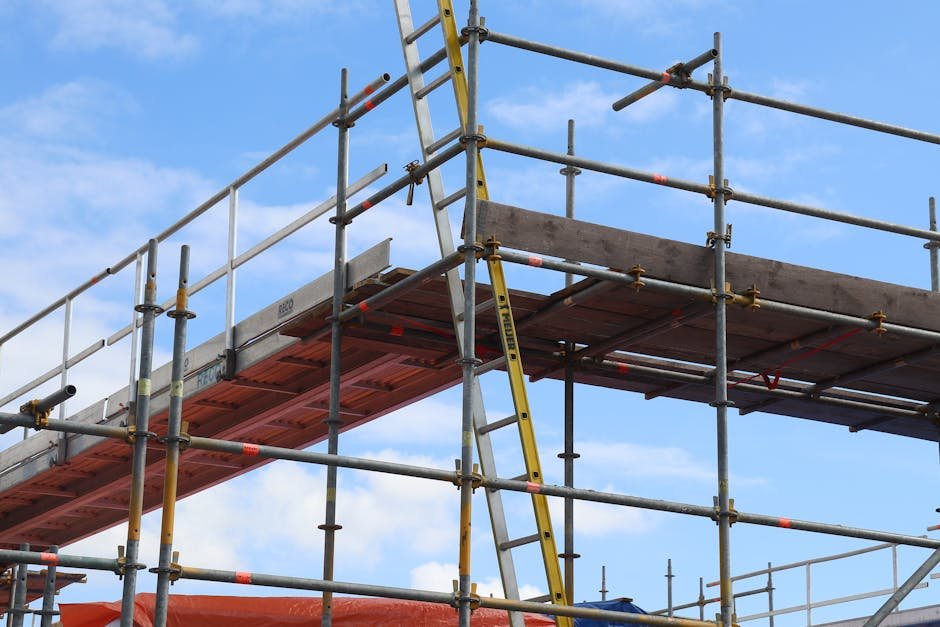
For example, you may have a case if defective scaffolding failed, a delivery driver caused the accident, or another contractor created a dangerous condition. These third-party claims can cover losses that workers’ compensation may not fully pay, such as pain and suffering. This is a critical factor for construction accident lawyer.
This is where case analysis matters. A construction accident lawyer can review contracts, site roles, safety duties, and product issues to determine whether a lawsuit exists alongside a workers’ compensation claim.
Common third-party defendants
- Subcontractors working on the same site
- Property owners or developers
- Equipment manufacturers
- Vendors and delivery companies
- Maintenance or safety contractors
The CDC notes that falls remain a leading cause of death in construction, which often raises questions about scaffolds, ladders, guardrails, and site supervision. Source: cdc.gov.
What should you do right after a construction accident?
Right after a construction accident, get medical care, report the incident, and protect the evidence. Quick action supports your health first, then helps preserve the facts your claim may depend on later. It matters greatly when considering construction accident lawyer.
Tell a supervisor what happened as soon as you can, and ask for a written incident report. Take photos of the scene, your injuries, tools, machinery, and any visible hazards if you are physically able to do so. This is especially true for construction accident lawyer.
Keep every medical bill, work note, and wage record in one place. You should also avoid detailed statements to insurance adjusters before you understand your legal position, especially if fault is disputed. Workers Compensation Lawyer: When to Hire One
First steps to take
- Get emergency and follow-up medical treatment
- Report the injury to your employer
- Photograph the scene and equipment
- Collect witness names and contact details
- Speak with a construction accident lawyer promptly
The FDA states that prompt treatment and accurate medical documentation help support safer care and clearer records after serious injuries. Source: fda.gov.
Can you sue if workers’ comp covers your injury?
Yes, sometimes. Workers’ compensation usually limits claims against your employer, but a construction accident lawyer may still pursue a separate case against a negligent third party, such as a subcontractor, property owner, equipment maker, or driver on the site.
Workers’ comp often pays medical costs and part of your lost wages, but it usually does not cover pain and suffering. A third-party claim can seek broader damages when someone other than your employer caused or worsened the accident. The same holds for construction accident lawyer.
Common third-party cases involve falls from defective scaffolds, trench collapses caused by outside crews, and machinery failures tied to unsafe design. Reviewing contracts, site logs, and maintenance records early helps your lawyer identify every liable party before key evidence disappears. This is worth considering for construction accident lawyer.
The BLS Injuries, Illnesses, and Fatalities program reported 1,075 fatal work injuries in construction in 2023, the highest count among private industry sectors. Source: Bureau of Labor Statistics.
Workers Compensation Lawyer: When to Hire One
Expert insight.
How much is a construction accident claim worth?
It depends on the injury, the proof, and who caused it. A construction accident lawyer values a claim by adding financial losses, future care needs, wage impact, and non-economic harm such as pain, disability, and reduced quality of life.
Strong claims usually include detailed medical records, imaging, treatment plans, wage statements, and expert opinions about future limitations. If you cannot return to the same trade, your lawyer may also calculate diminished earning capacity over many years. This insight helps anyone dealing with construction accident lawyer.
Fault matters too. If several companies shared site control, your lawyer may pursue each one and their insurers, which can increase available coverage and improve settlement leverage during negotiations.
The CDC notes that falls remain the leading cause of death in construction, which is one reason severe fall cases often involve high medical costs and long recovery periods. See CDC construction safety resources. Source: Centers for Disease Control and Prevention.
In practice, a common mistake is accepting a quick insurer offer before doctors understand the full extent of spinal, brain, or orthopedic damage. Early offers often miss future surgery, rehab, and lost earning power.
How long do you have to file a construction accident claim?
The deadline depends on state law and the type of claim. A construction accident lawyer can identify the statute of limitations, preserve evidence, and make sure notice requirements, insurance filings, and court deadlines do not block your recovery.
Timing matters because construction sites change fast. Video footage gets deleted, equipment is repaired or replaced, and witnesses move to other projects, which makes early investigation one of the most important parts of a strong case.
Special rules may apply if a government agency owns the site, if the injured worker is a minor, or if the injury was not discovered right away. Tax issues can also arise after a settlement, so it helps to review IRS settlement tax guidance when evaluating final numbers.
According to the BLS, construction had a fatal injury rate of 9.6 per 100,000 full-time equivalent workers in 2023, showing why fast reporting and investigation matter after a serious site accident. Source: BLS fatal occupational injuries news release.
How does a construction accident lawyer prove liability when several companies controlled the same jobsite?
A strong construction accident lawyer builds a layered liability case when an owner, general contractor, subcontractor, staffing agency, and equipment company all touched the site. The key issue is not just who employed you, but who controlled the hazard, created the unsafe condition, ignored safety rules, or failed to correct a known risk. Fast evidence collection matters because contracts, site logs, and electronic records can shift blame within days.
On complex projects, liability often turns on control documents rather than job titles. Your lawyer will compare prime contracts, subcontracts, indemnity clauses, daily reports, toolbox talk records, safety manuals, and incident emails to identify who had authority over the work area and who had a duty to inspect or stop work.
That review also helps separate a workers’ compensation claim from a third-party injury case. If your direct employer pays workers’ comp, you may still sue another company that caused the fall, trench collapse, struck-by event, or electrocution, depending on state law and the facts of the site.
What evidence usually makes the difference
Strong cases often hinge on evidence that disappears first, including scaffold tags, lift inspection records, temporary power layouts, fall protection anchor points, and surveillance footage. A lawyer may send preservation letters immediately so the owner, contractor, or vendor does not overwrite video or discard damaged equipment before an expert inspects it.
Federal safety standards can help frame the hazard even when they do not automatically prove negligence. The BLS Injuries, Illnesses, and Fatalities program tracks how often severe work injuries occur, while CDC NIOSH construction safety resources explain recurring risks such as falls, struck-by incidents, and trench hazards.
BLS consistently reports that falls, slips, and trips remain the leading cause of death in construction, making site control and fall protection records central in many lawsuits. That statistic gives context to why lawyers focus on who selected the system, inspected it, and had authority to stop unsafe work.
For example, a worker falls from a scaffold assembled by one subcontractor, used by another, and inspected only on paper by the general contractor. A construction accident lawyer may pursue the scaffold company for defective components, the subcontractor for unsafe assembly, and the general contractor for failing to enforce site-wide fall protection rules.
When should you settle, and when is filing suit the smarter move after a construction accident?
A construction accident lawyer should not treat settlement as the default or trial as a threat. The better question is timing and leverage. Early settlement can help if liability is clear, injuries are stable, and insurance limits are known, but filing suit may be necessary to obtain internal reports, depose supervisors, and uncover missing coverage layers that increase case value.
Pre-suit negotiations often fail because insurers minimize future treatment, lost earning capacity, or the seriousness of permanent restrictions. Once a lawsuit starts, your lawyer can use discovery to demand contracts, maintenance logs, incident photos, prior complaints, and witness testimony that can expose a stronger negligence case.
That said, rushing into court without understanding medical prognosis can hurt your claim. If surgeries, work restrictions, or long-term pain management remain uncertain, a low offer may lock in damages before the full cost of the injury becomes clear, especially in spine, brain, crush, and amputation cases.
How experienced lawyers evaluate settlement value
Case value depends on more than current medical bills. A lawyer will assess future care, reduced ability to perform skilled trades, overtime loss, union benefit disruption, pain and suffering, scarring, and whether a third party acted recklessly enough to support punitive damages under state law.
Economic proof matters here. The BLS Occupational Employment and Wage Statistics can help show expected wages in construction trades, and IRS records and income documentation guidance can support earnings history when a worker had variable pay, overtime, or multiple project assignments.
The CDC reports that traumatic brain injury contributes to a significant number of injury-related deaths and long-term disability in the United States, which is why head injury cases often require caution before settlement. Future cognitive limits can reduce a person’s ability to return to high-risk site work even when imaging looks normal at first.
For example, an electrician with a fall-related head injury receives a quick $125,000 offer six weeks after the accident. A construction accident lawyer may advise waiting until neuropsychological testing, specialist opinions, and wage-loss analysis are complete, then file suit if the carrier refuses to account for long-term memory issues and reduced earning power.
What mistakes can reduce the value of a construction accident claim, and how can you avoid them?
A construction accident lawyer can add value quickly by stopping avoidable mistakes in the first days and weeks after the injury. The biggest problems usually involve inconsistent reporting, social media posts, skipped treatment, undocumented cash wages, and speaking with an insurer before understanding whether the caller represents your employer, another contractor, or a liability carrier looking to limit exposure.
Medical gaps are especially damaging because insurers use them to argue that you healed, exaggerated symptoms, or caused later complications yourself. If you cannot attend treatment because of transport, cost, or language barriers, tell your lawyer and doctor right away so the record reflects the real reason for the interruption.
Documentation errors create another common weakness. Construction workers often have overtime, side jobs, per diem, seasonal work, or mixed W-2 and 1099 income, and missing records can understate wage loss unless your lawyer collects tax returns, pay stubs, union records, bank deposits, and text messages showing work history.
Practical claim-protection steps
-
Report the accident promptly and keep a copy of every written report.
-
Photograph the scene, equipment, harnesses, ladders, trench walls, and visible injuries as soon as possible.
-
Follow treatment instructions and keep a calendar of pain, limitations, and missed work tasks.
-
Do not give recorded statements to outside insurers without legal advice.
-
Preserve wage records, including overtime and second-job income. [
Option Best For Cost Workers’ compensation claim Employees who need medical care and partial wage replacement after a job site injury No upfront filing fee in most cases, benefits limited by state law Personal injury claim against a third party Cases involving subcontractors, property owners, drivers, or equipment makers Usually contingency fee, often 25% to 40% of recovery Wrongful death lawsuit Families after a fatal construction accident caused by negligence Usually contingency fee, case expenses may be advanced by counsel OSHA safety complaint Workers reporting ongoing hazards such as falls, trench risks, or unsafe scaffolds $0 to file Social Security Disability benefits Workers with long-term impairments that prevent substantial work activity $0 to apply, attorney fee only if approved and capped by federal rules Frequently Asked Questions
Do I need a construction accident lawyer if workers’ comp is already paying?
Maybe. Workers’ comp usually covers medical treatment and part of lost wages, but it does not always pay for pain and suffering. A lawyer can check whether a third party, such as a subcontractor, site owner, or equipment manufacturer, also caused the accident and whether you can pursue a separate claim for more compensation.
How long do I have to file a construction accident claim?
The deadline depends on your state and on the type of claim. Workers’ comp notice deadlines can be very short, while personal injury lawsuits often have a statute of limitations measured in years. Act quickly, because delay can weaken evidence, witness memory, and access to records that may prove how the accident happened.
What compensation can I recover after a construction site injury?
You may recover medical costs, a portion of lost wages, disability benefits, and, in some third-party cases, damages for pain, suffering, and future lost earning capacity. Fatal cases may also include funeral expenses and family losses. The exact amount depends on fault, insurance coverage, your injuries, and how long your limitations last.
Can I sue my employer after a construction accident?
In many cases, workers’ compensation is the exclusive remedy against an employer, but there are exceptions under some state laws. You may still have a strong claim against someone other than your employer. If unsafe conditions remain on site, review construction safety guidance from CDC NIOSH and speak with counsel right away.
What should I bring to my first meeting with a construction accident lawyer?
Bring accident photos, incident reports, witness names, pay stubs, tax records, medical records, and all insurance letters. Also bring your job title, employer details, subcontractor names, and a timeline of what happened before and after the injury. These documents help a lawyer identify all possible claims and estimate lost income more accurately.
The author has experience writing legally reviewed content on workplace injuries, workers’ compensation, and personal injury claims involving construction accidents.
📖 Related Articles
Final Thoughts
A construction accident lawyer can help you protect evidence, identify every liable party, and calculate the full value of your losses before insurers push for a quick settlement. Focus on three actions now: report the injury promptly, keep complete records of treatment and missed income, and get legal advice before signing releases or giving detailed insurer statements.
Your next step is simple, schedule a consultation today, organize your photos and wage records, and write down a clear timeline of the accident while details are still fresh. If your injuries may affect long-term work ability, review federal disability information at IRS records and tax document guidance to help support income proof, and continue preserving every document tied to the claim.
📚 You May Also Like
 Truck Accident Lawyer: What You Need to Know
May 14, 2026
 Contract Lawyer: What They Do and When to Hire One
May 22, 2026

Author: Lawyer Near Me Directory